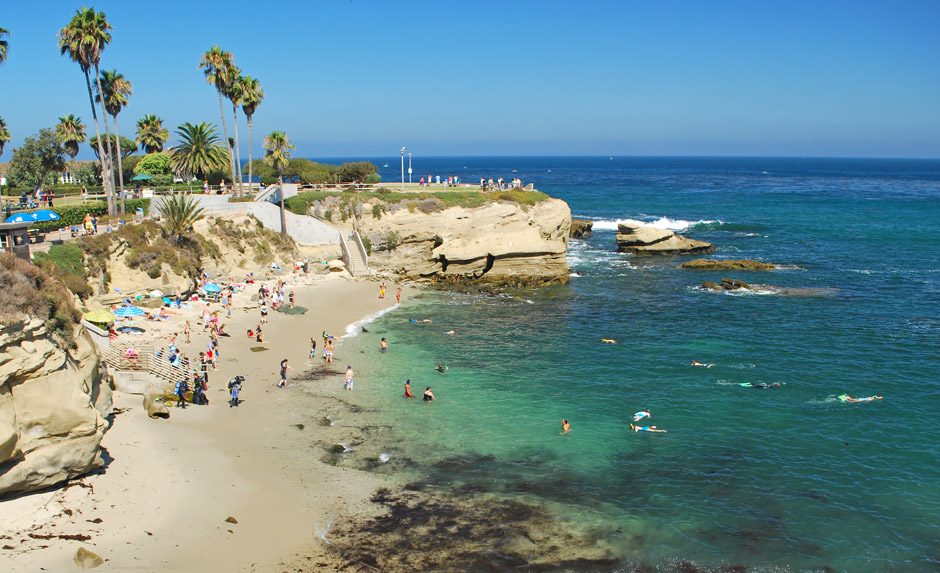
The Cove
The central swimming and snorkeling area characterized by rocky reefs and calm, protected waters. It is the primary access point for observing Garibaldi and sea turtles.
Observe the rock crevices to spot moray eels.
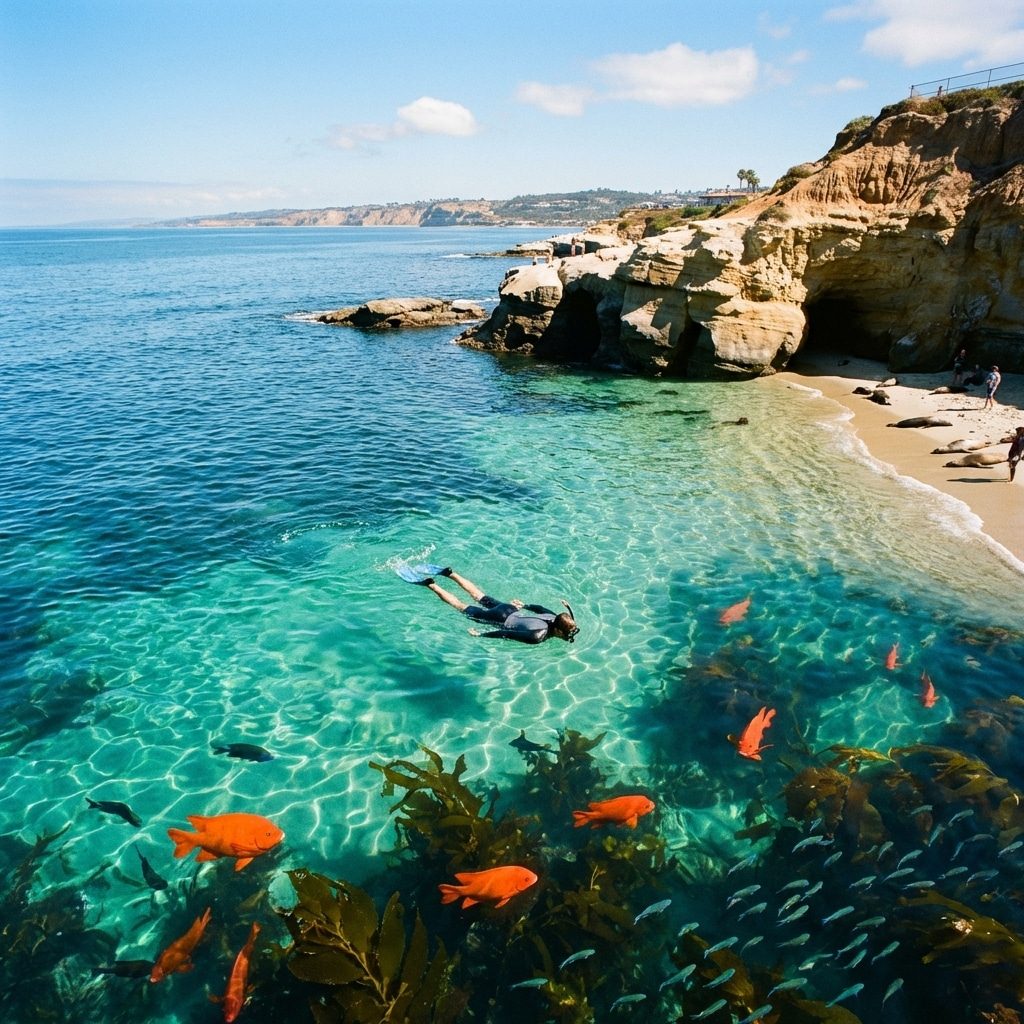
La Jolla Cove sits inside the San Diego-La Jolla Underwater Park Ecological Reserve, a 6,000-acre protected zone where garibaldi, leopard sharks, and bat rays move through kelp forests year-round. The beach itself is a small crescent of sand hemmed by sandstone cliffs, with entry to both the shore and the water free to the public every day of the year.
Quick answer
La Jolla Cove is open 24 hours daily with no entrance fee, making it one of the most accessible snorkeling places in San Diego. The water stays swimmable year-round thanks to the California Current, though visibility peaks between June and October when plankton blooms subside. Arrive between 7:00 and 9:00 AM to claim one of the limited metered parking spots on Coast Boulevard before the midday surge.
La Jolla Cove recorded 1.2 million visitors in 2025, yet the actual snorkeling zone remains a narrow 200-yard corridor between the beach and the kelp line, where depth rarely exceeds 20 feet. That concentration means weekends between 10:00 AM and 3:00 PM see enough swimmers to reduce visibility and disturb the sediment. The San Diego-La Jolla Underwater Park was designated an ecological reserve in 1971, banning all fishing and collecting within its boundaries. Garibaldi, California's state marine fish, patrol the rocky shelves in schools of twelve or more. Leopard sharks cruise the sandy flats from June through December, and the occasional horn shark wedges itself under ledges during daylight hours. The kelp canopy thickens in summer, creating vertical structure that harbors señoritas, blacksmith fish, and juvenile rockfish. Water temperature hovers between 57°F in February and 68°F in August. Most snorkelers wear at least a 3mm wetsuit year-round; the Pacific never warms to barefoot comfort, even in peak summer. Swell direction matters more than season—southern swells in late summer can churn the Cove into a washing machine, while northern winter swells often leave the bay glass-calm. Check the surf report for La Jolla Shores, one mile north; if that beach shows overhead waves, the Cove will be unsettled. Parking runs on two-hour meters along Coast Boulevard, enforced until 8:00 PM daily. The lot at 1100 Coast Boulevard holds roughly 30 vehicles and fills by 9:30 AM most weekends. Overflow parking sits a quarter-mile uphill on Prospect Street, adding a steep walk back to your car while carrying wet gear. The number 30 bus stops at Torrey Pines Road and Prospect Street, a half-mile from the Cove, though service runs only hourly on weekends.
“The San Diego-La Jolla Underwater Park has banned all fishing and collecting since 1971, turning 6,000 acres of coastline into a living laboratory for kelp-forest species.”
The best arrival window for snorkeling La Jolla Cove is 07:00–09:00 to secure limited parking and experience calmer water conditions. Planning your visit during this early window minimizes interactions with crowds and provides higher visibility for viewing marine life.
Warm water 68–72°F
Visibility is highest during these months due to reduced plankton bloom.
Cool water 58–62°F
Water clarity is often high, though sea conditions can be more turbulent.
—
These times offer the least congested experience and the best access to near-shore parking.
Mild water 62–66°F
These transition months balance pleasant air temperatures with clear, swimmable water.
Verdict: The best slot for snorkeling is weekday mornings during the months of April or October for the combination of manageable crowds and stable water visibility.
La Jolla Cove is accessible to the public throughout the week. Visitors may access the area at any time during the day or night.
Access to La Jolla Cove for snorkeling is managed by the City of San Diego. There are no admission fees required to enter the beach or the cove area.
Verdict: A typical adult pays 0 USD to access the beach, as there are no entrance fees for the general public.
La Jolla Cove is located at 1100 Coast Blvd, La Jolla, CA 92037, USA. The most direct approach is via car or local bus transit serving the La Jolla Village area.
Follow I-5 to La Jolla Village Drive, then head west toward Coast Blvd
Take MTS Route 30 to La Jolla Blvd & Ravina St
Walk from Scripps Park along the Coast Blvd pathway
Arrive during the best arrival window of 07:00–09:00 to secure limited parking and enjoy calmer waters before crowds increase.
La Jolla Cove is part of the San Diego-La Jolla Underwater Park, which encompasses various marine zones protected for biodiversity. These areas offer distinct underwater topographies and access to common local marine life.
The central swimming and snorkeling area characterized by rocky reefs and calm, protected waters. It is the primary access point for observing Garibaldi and sea turtles.
Observe the rock crevices to spot moray eels.
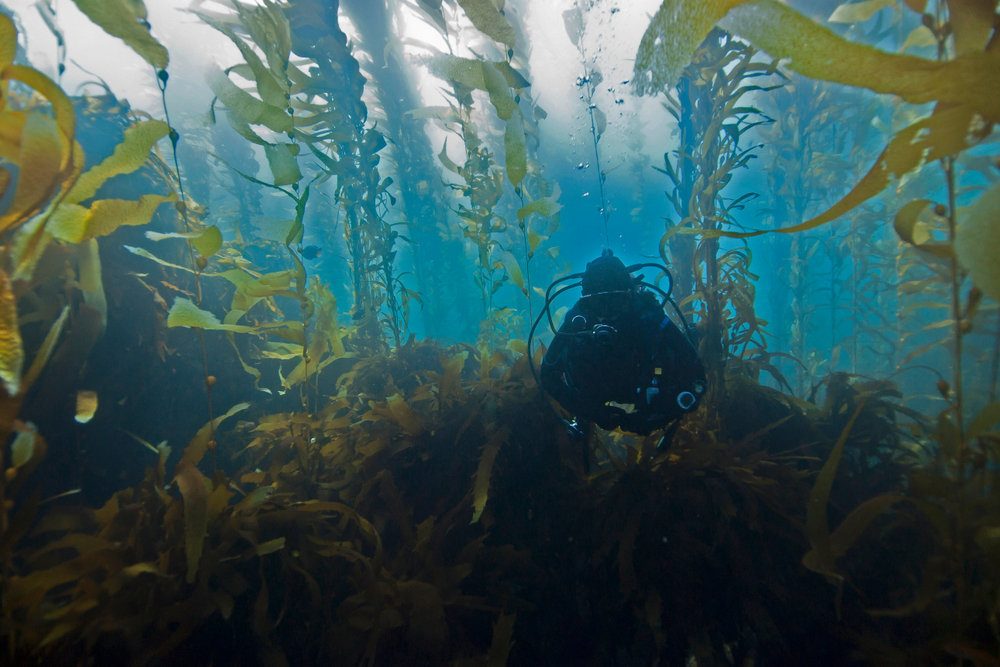
A protected ecological zone stretching from La Jolla Cove to the Scripps Pier. Fishing and collecting are prohibited to ensure the preservation of kelp forests and diverse fish species.
Keep a distance from sea lions resting on rocks.
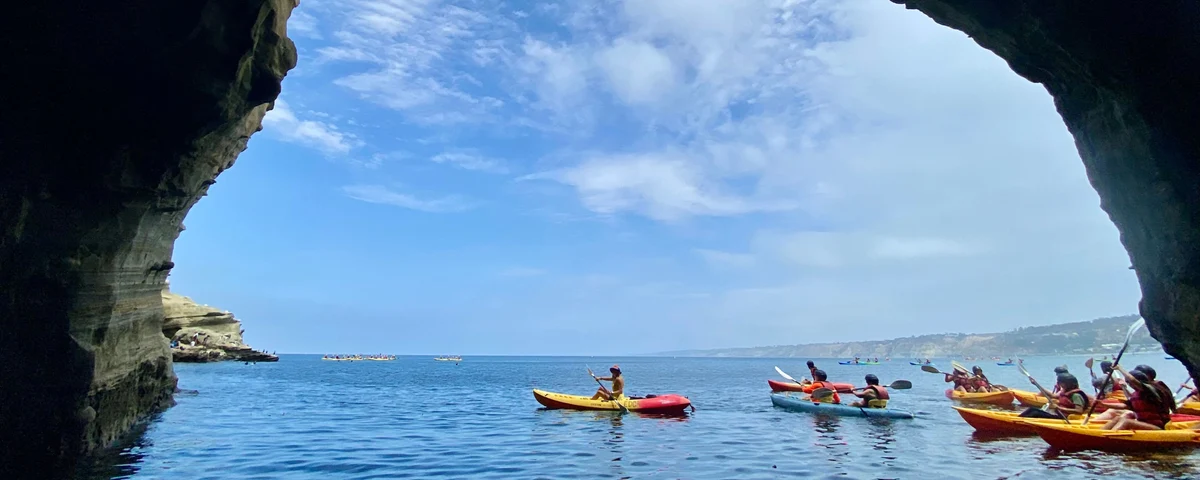
A series of coastal sea caves accessible via water, including the largest known as Clam’s Cave. These formations provide unique geological interest and shelter for various aquatic creatures.
Paddle toward the caves only during low tide.
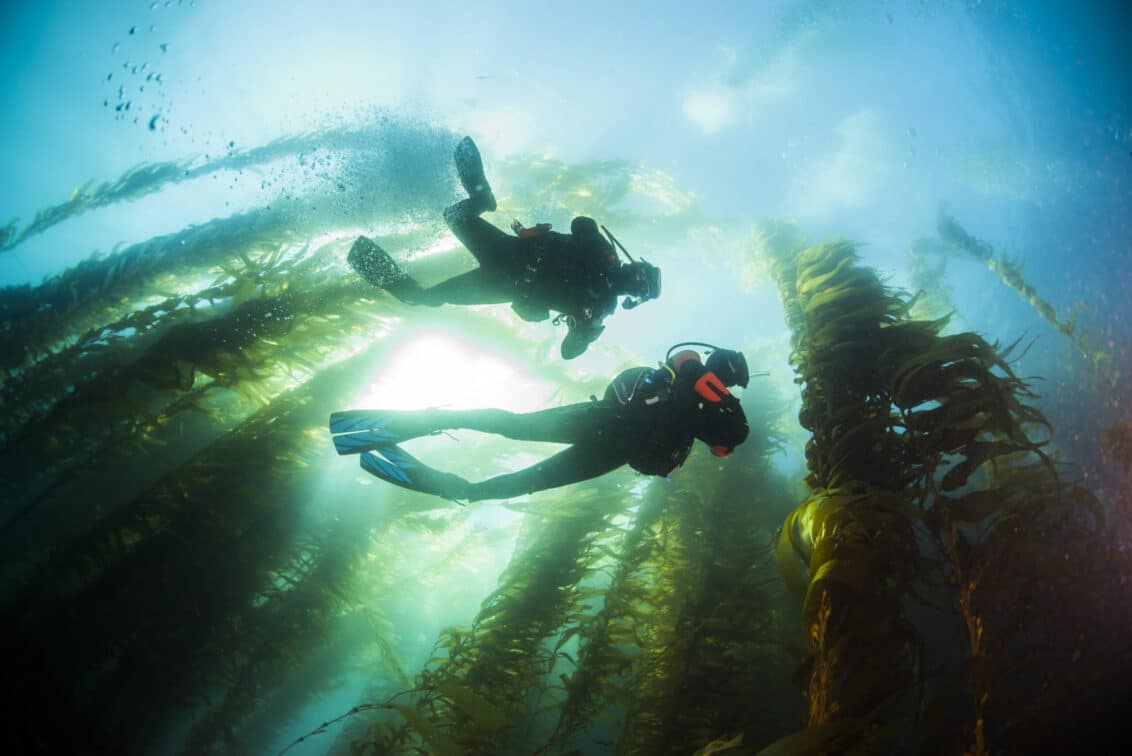
Dense underwater vegetation located just beyond the shallow rocky reefs. These forests serve as a nursery for numerous species and offer a complex environment for snorkelers.
Look for schools of fish within the kelp.
La Jolla Cove sits within a protected marine reserve where wildlife interactions and beach conduct follow strict conservation rules. Following these guidelines protects the ecosystem and keeps you safe around sea lions and kelp beds.
La Jolla Cove requires minimal gear but proper preparation ensures comfort and safety in the water.
Everything you need to know about snorkeling places in san diego
La Jolla Cove is widely considered the premier destination among snorkeling places in san diego due to its protected marine reserve status. The clear water provides excellent visibility for observing garibaldi, leopard sharks, and other diverse sea life.
You do not need to pay to access the beach or water, as there is 0 USD entrance fee for snorkeling places in san diego at this location. This makes the cove a popular destination for those seeking accessible outdoor water activities.
To avoid large crowds and ensure easier parking, the best arrival window is 07:00–09:00. Arriving during these morning hours typically results in calmer water conditions, which are ideal for exploring various snorkeling places in san diego.
As a protected ecological reserve, visitors must refrain from touching, feeding, or removing any marine organisms or artifacts. Adhering to these regulations helps maintain the health of the habitat for all who visit these snorkeling places in san diego.
While many independent visitors explore the area on their own, various local operators offer an underwater tour for those who prefer professional guidance. These services help visitors navigate the kelp forests and identify hidden wildlife safely.
The sheltered nature of the cove creates a relatively calm environment that is often appropriate for beginners. However, visitors should always check local lifeguard reports and ocean conditions before entering the water at any of the snorkeling places in san diego.
Can You Snorkel in San Diego?
Read more GuideSnorkeling Mission Bay
Read more GuideSnorkeling La Jolla Cove
Read more GuideIs It Safe to Snorkel in La Jolla Cove?
Read more Tickets & toursSan Diego Snorkeling Boat Tours
Read more Tickets & toursSnorkeling Gear Rentals in San Diego
Read more