English| EUR
Suggested for you
More currencies
Choose a language
La Jolla Cove draws thousands of snorkelers each year to its protected waters and kelp forests. Understanding tide patterns, surf conditions, and marine life behavior determines whether your visit will be safe or require postponing for calmer seas.
Quick answer
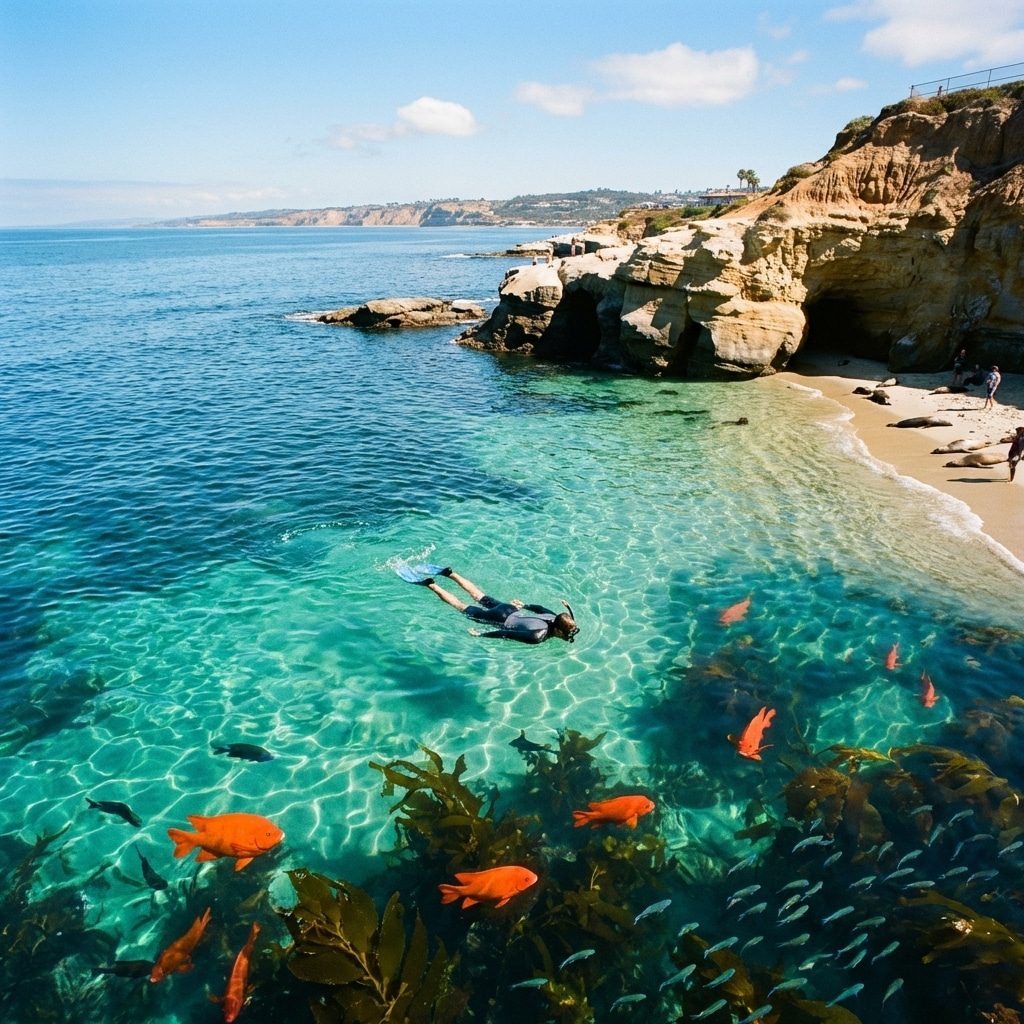
La Jolla Cove is generally safe for snorkeling when waves measure under three feet and visibility exceeds ten feet, conditions most common during summer mornings. The protected ecological reserve hosts leopard sharks, sea lions, and garibaldi in calm conditions, but winter swells, rip currents near the cave entrances, and territorial sea lions during pupping season create hazards that require checking daily surf reports and lifeguard warnings before entering the water.
La Jolla Cove records fewer than five rescue incidents per thousand visitors during calm-water months, a safety rate attributed to its designated underwater park status and year-round lifeguard presence at 1100 Coast Blvd. The cove's crescent shape shelters swimmers from prevailing northwest swells between May and October, when morning water temperatures reach 65-70°F and surge remains minimal near the rocky shoreline. Whether snorkeling La Jolla Cove poses risk depends on three variables: swell direction, tide phase, and seasonal marine life patterns. South-facing swells during tropical storm season push confused seas into the protected zone, reducing visibility below safe thresholds and creating unpredictable currents near Sunny Jim Cave's submerged entrance. Low tides expose slippery rocks along the entry beach and concentrate surge energy in shallow zones where snorkelers lose footing. Late spring through early autumn brings California sea lion pups into the ecological reserve, and protective mothers display aggressive posturing toward swimmers who approach closer than fifty feet. Marine hazards at the cove differ from open-ocean risks. Leopard sharks forage in sandy shallows without threatening humans, while the occasional sevengill shark cruises kelp edges beyond recreational snorkeling depth. Stingrays bury in sand near the entry point, necessitating the shuffle-step entry technique lifeguards demonstrate on high-traffic mornings. The kelp forest's swaying fronds disorient novice snorkelers who lose spatial reference, though the canopy sits in twelve to twenty feet of water and never traps swimmers as persistent myths suggest. Optimal safety windows align with the best arrival window between 7:00 AM and 10:00 AM, when offshore winds flatten surface chop and underwater visibility peaks at thirty feet. Winter months shift risk calculations as storm surf reaches eight to twelve feet, closing the cove to all water activities under red flag warnings posted by San Diego Lifeguard Services. Checking the daily surf forecast and observing other snorkelers' ease of entry provides ground-truth assessment no static guide can match, since La Jolla Cove snorkeling conditions change within hours as tide and swell patterns shift through their cycles.
“The cove's crescent shape shelters swimmers from prevailing northwest swells between May and October, when morning water temperatures reach 65-70°F and surge remains minimal near the rocky shoreline.”
The best arrival window is 07:00–10:00 to ensure calmer morning water and easier parking. Planning your visit during these hours minimizes exposure to peak crowds, which significantly improves safety and overall experience.
—
Fewer visitors provide more space and safer entry conditions. Arriving during this window helps avoid the high-traffic periods later in the day
70–75°F water; high air temps
Warm water temperatures are frequent, but peak tourist volume occurs. Early arrival remains necessary to manage shore safety
60–65°F water; mild air temps
Water is cooler, but visitor numbers are more manageable. These months offer a balance of moderate crowds and stable conditions.
Verdict: The best time to snorkel at La Jolla Cove is weekday mornings between 07:00 and 10:00 during the months of April or October.
Snorkelers at La Jolla Cove often misjudge conditions or wildlife proximity, turning a calm outing into a safety incident. Recognizing these errors before you enter the water keeps you safe and protects marine life.
Ignoring red or yellow lifeguard flags
Check the flag status at the lifeguard tower before entering. Red means hazardous conditions; yellow signals moderate risk and requires caution.
Swimming against rip currents instead of parallel to shore
If caught in a rip current, swim parallel to the beach until free of the pull, then angle back toward shore. Fighting the current directly exhausts you.
Getting too close to sea lions or seals
Maintain at least 50 feet from all marine mammals. They can bite or charge if they feel threatened, and federal law prohibits closer approach.
Entering unfamiliar underwater caves or swim-throughs
Stay in open water unless you have cave-diving training and a guide. Caves at the Cove have narrow exits and surge that can trap inexperienced swimmers.
Snorkeling alone without a surface float or buddy
Always use a brightly colored float and snorkel with a partner. Solo snorkelers are harder for boats to spot and have no help if conditions shift.
La Jolla Cove sits within the San Diego-La Jolla Underwater Park Ecological Reserve, where state marine protection rules govern all activities. Compliance protects both the reserve's wildlife and your safety around sea lions.
La Jolla Cove is accessible to the public every day of the week. Visitors can plan their snorkeling trips at any time during these daily operating hours.
Access to La Jolla Cove is open to the public without any entry fees. There are no admission costs required to enjoy the beach or the snorkeling area.
Verdict: A typical adult pays 0 USD to access the beach, as entry is completely free for everyone.
La Jolla Cove is located at 1100 Coast Blvd, La Jolla, CA 92037. The most direct approach is by car via Interstate 5, taking the La Jolla Village Drive or Ardath Road exits toward the coastline.
Interstate 5 to La Jolla Village Drive
MTS Route 30 to La Jolla Blvd & Prospect St
Direct to 1100 Coast Blvd
Parking in the immediate vicinity of 1100 Coast Blvd is limited to street parking and public lots. Plan to arrive early to secure a space before the limited coastal spots fill up.
Everything you need to know about is it safe to snorkel in la jolla cove
Generally, it is safe to snorkel in La Jolla Cove, provided you remain aware of ocean conditions and local currents. The area is a protected marine reserve known for its clear, calm waters and abundant aquatic life. Always observe posted safety warnings and assess your personal swimming ability before entering the water. As you plan your visit to this California coastline landmark, ensuring you understand the maritime environment is key to a positive experience.
Yes, the area is patrolled by San Diego lifeguards who monitor the water conditions and beach activity. They provide an essential layer of oversight for those wondering if it is safe to snorkel in La Jolla Cove. You should always check in with them regarding current visibility and tide levels before heading out.
Snorkeling here with children can be safe if they are strong swimmers and remain in the shallow, protected sections of the marine sanctuary. Supervision is required at all times, as water depths can increase quickly beyond the inner reef. Many families enjoy the shallow tide pools and protected surf, but you must prioritize caution based on the child's comfort level with the Pacific Ocean.
To ensure it is safe to snorkel in La Jolla Cove, the best arrival window is between 07:00 and 10:00. Arriving early helps you avoid mid-day crowds, provides calmer water, and ensures easier parking in the vicinity. Visibility is often best during these morning hours before the wind picks up and shifts the sediment.
While the reserve is home to leopard sharks, garibaldi, and seals, these animals are generally uninterested in human snorkelers. It is safe to snorkel in La Jolla Cove if you maintain a respectful distance and do not attempt to touch or feed the wildlife. Marine mammals like sea lions may be present, so please observe them from a safe distance to avoid unnecessary stress or protective behavior.
Beginners can safely enjoy the water here by sticking close to the shore and utilizing appropriate flotation devices. If you are new to the sport, consider joining a guided excursion to learn about local underwater terrain and currents. Staying within the designated swimming zones is the best way to ensure a secure experience while exploring the kelp forest.
There is no cost to access the beach, as the entrance fee is 0 USD. You do not need a ticket to enjoy the shoreline, which is a public area open for your recreational use. Be mindful that while the beach is free, parking in the surrounding neighborhood may be limited.